The operating system for physical operations.
Machinery, people, work, production and budget, together in one real model of your operation.
The ontology
Your operation already has an ontology.
The forklift in the warehouse, the crew, the agreement, the budget. They aren't rows in separate tools: they're objects, with relationships. Grivara OPS models them as they exist, and the software becomes a reflection of your operation, not another version of it to maintain.
Boards & workflows
Automations
Field & portal
What it records
The logic
Systems of action
On top, where the work happens. In the middle, the model. Below, what feeds it and what executes.
The thread
Everything that happens becomes a record.
The same objects from the model, traversed by a single event.
3:04 PM
The hospital chiller stops cooling.
Asset3:06 PM
The failure is already an order, with its priority and its clock.
Work order3:09 PM
The order found its technician: certified, available, close.
Technician5:40 PM
The evidence stayed on the order; the cost, on the asset.
Work orderAsset
Monday's decision was already written.
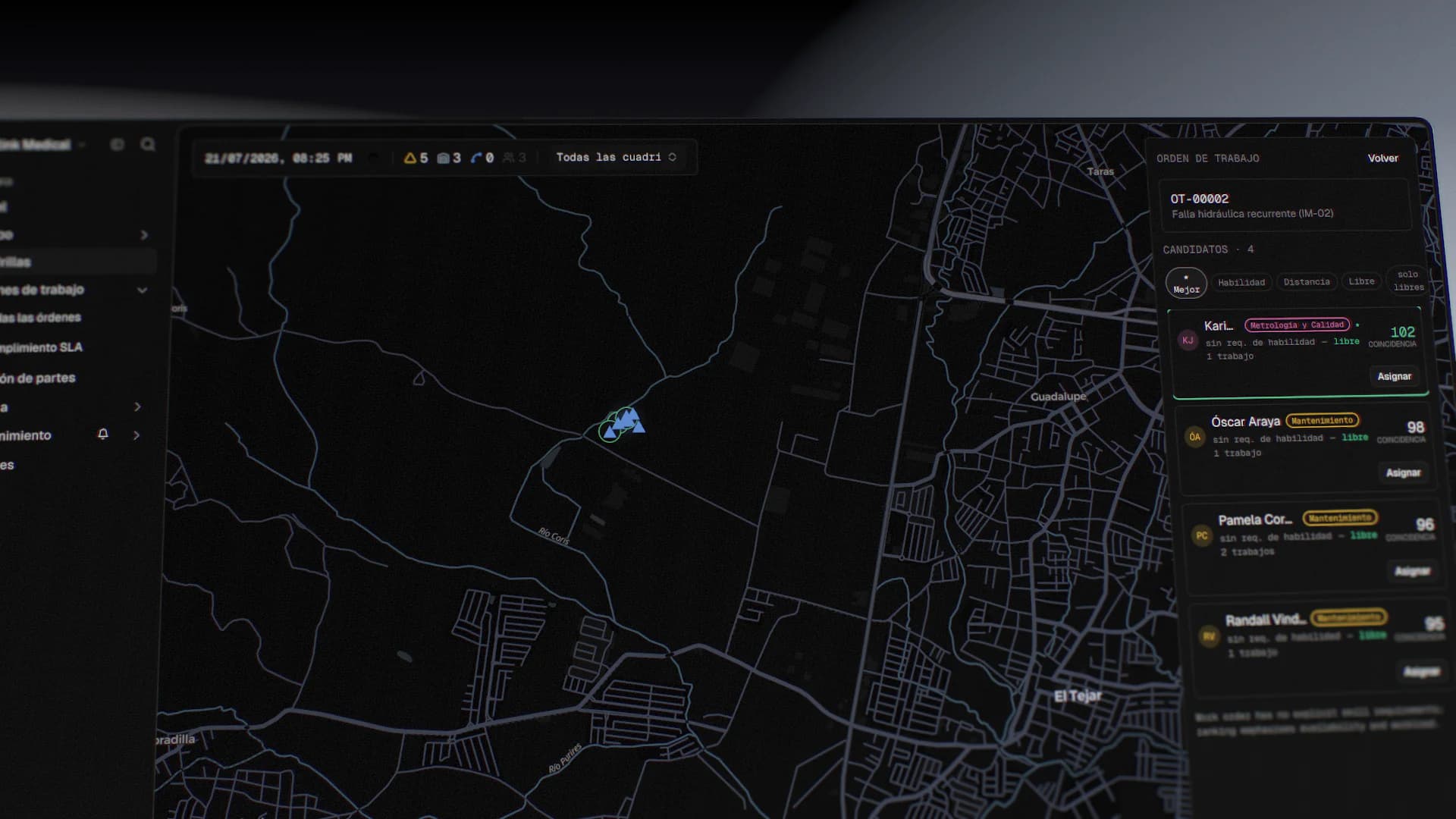
Watch the whole operation move.
Every unit, every crew and every order on the same map — deciding on what is happening, not on what someone remembers.
Today
Grivara OPS dispatches crews, maintains fleets and controls the budget. Six industries. The detail lives where it should:
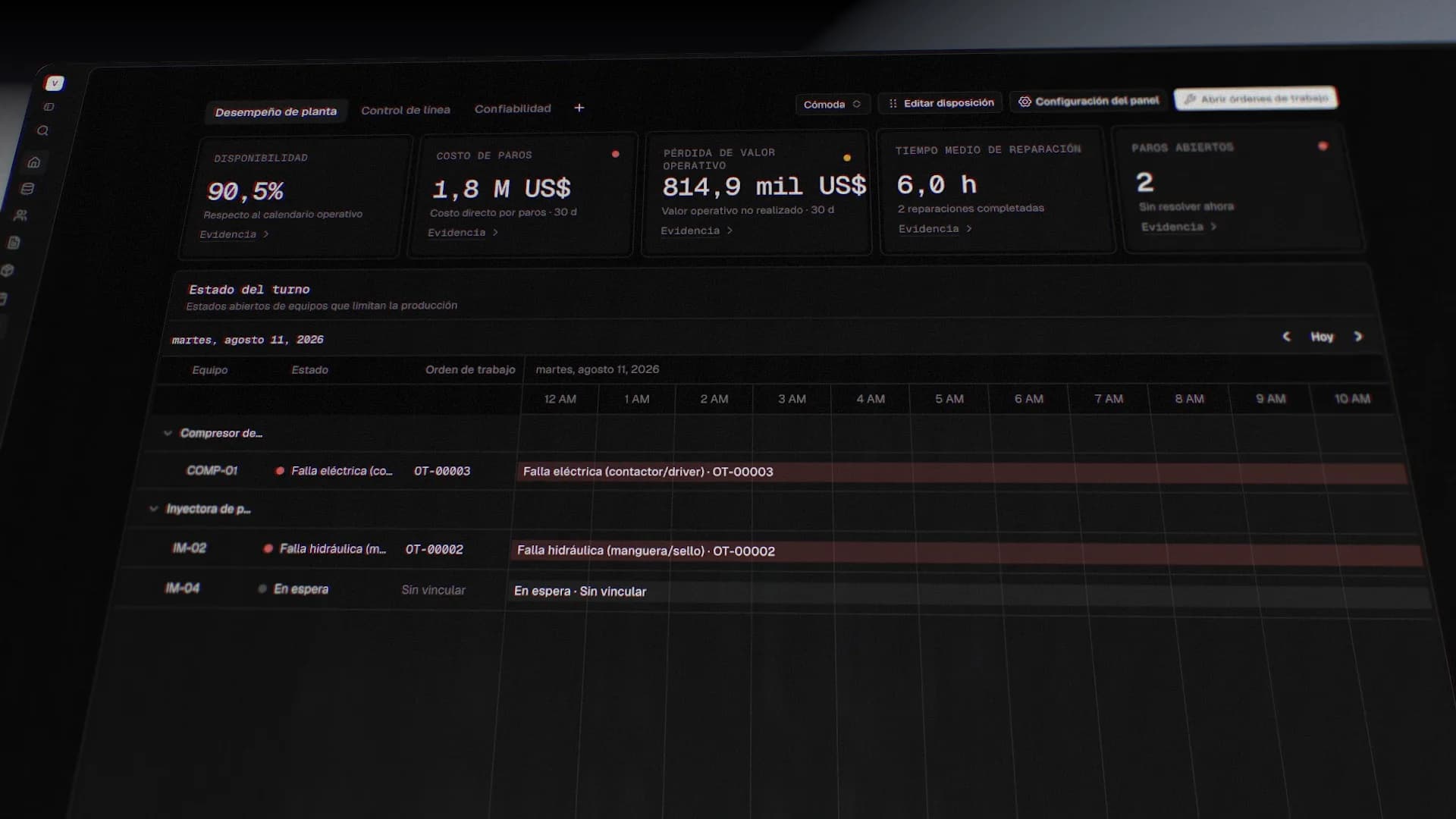
Production, in numbers that don't lie.
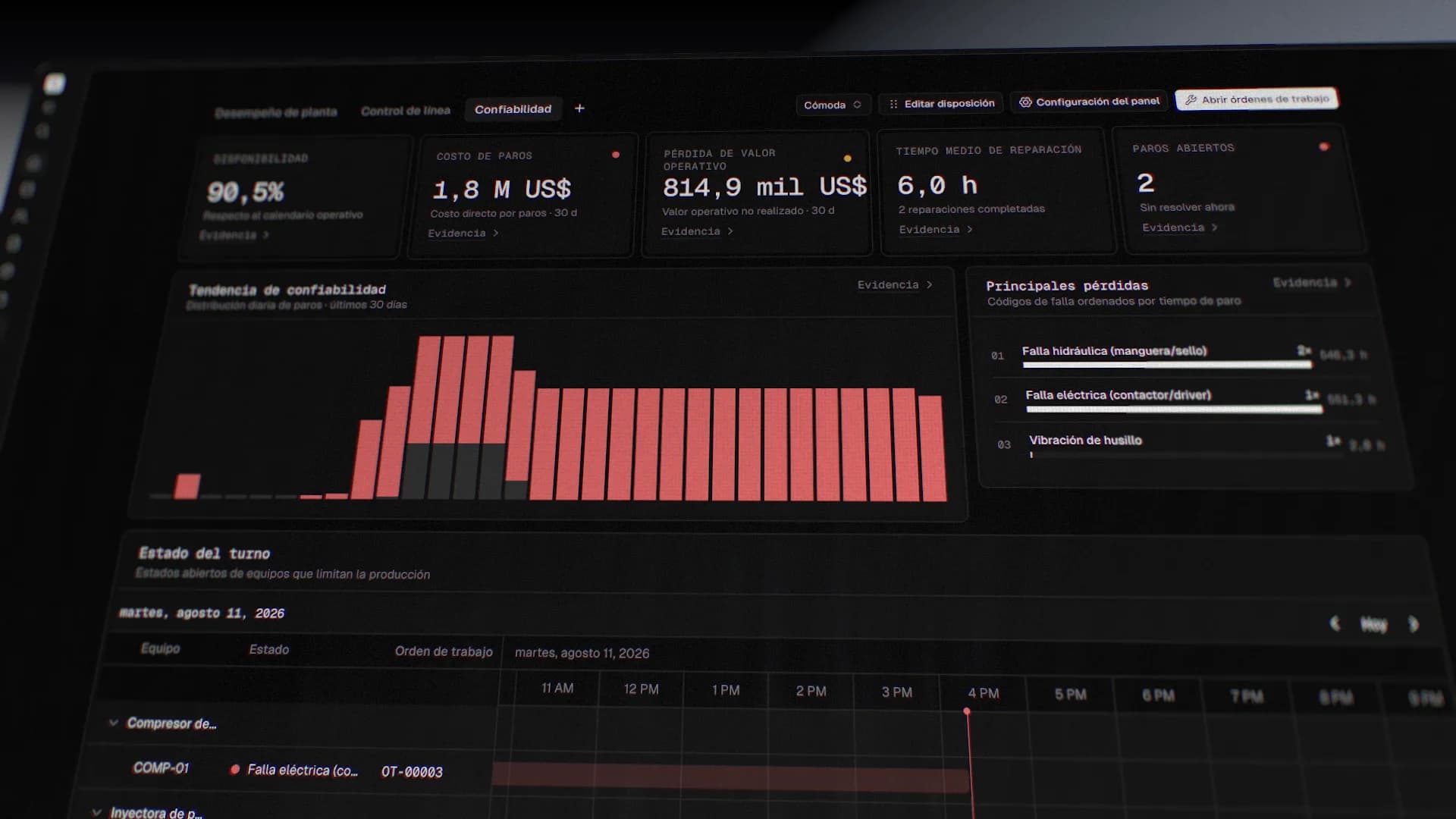
Availability, MTBF, MTTR and downtime cost come from the records, computed over the periods you declared as operating time, not estimated at month-end.
See it with your own operation.
One hour. Your equipment, your sites, your vocabulary.